
Key Takeaways
- "Alt," "finsta," "spam," and "burner" all describe the same thing: a secondary account someone keeps separate from their main profile.
- Hidden accounts rarely stay fully hidden — shared names, recycled photos, overlapping followers, and Instagram's own suggestions leak the connection.
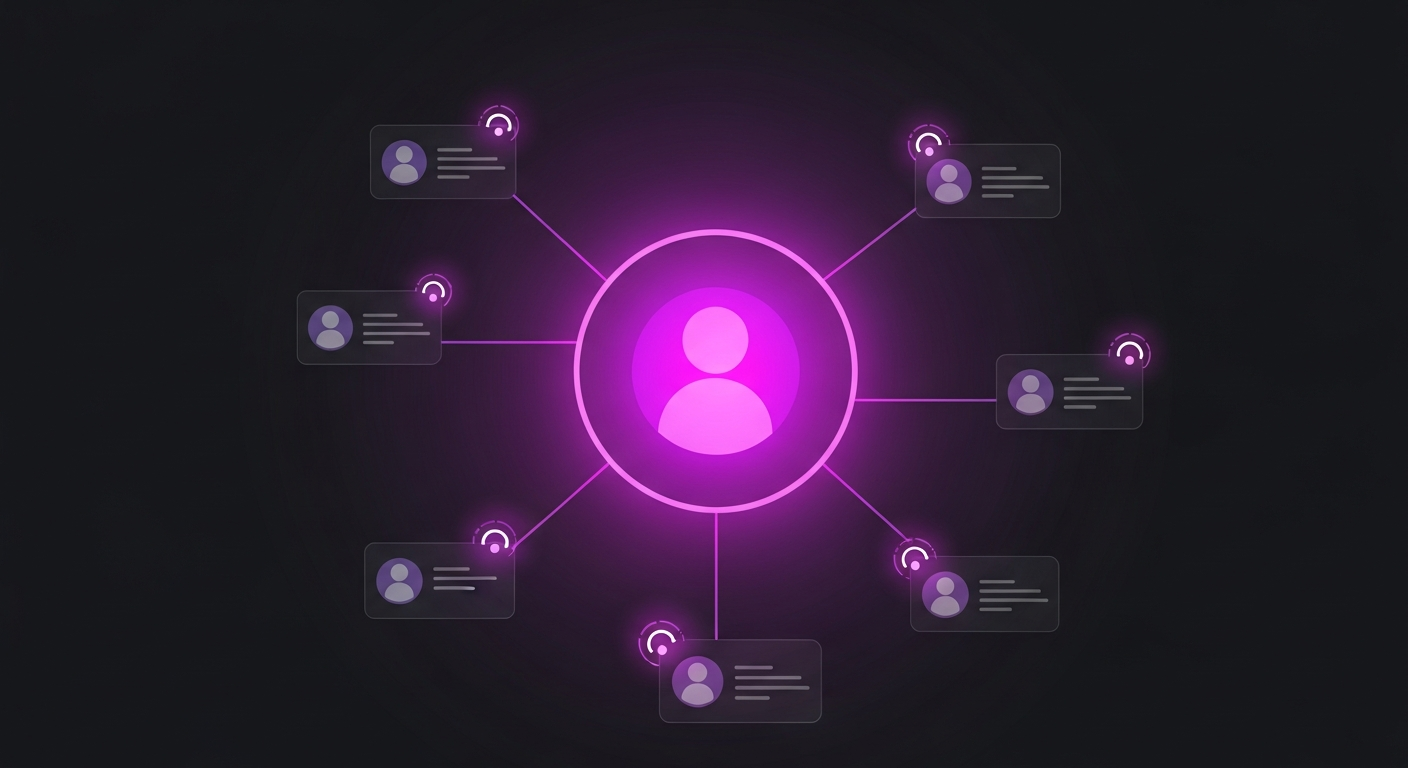
- An alt account finder reads those public signals and uses AI to rank the candidates most likely to belong to the same person.
- No method finds a truly isolated burner with zero links to the main account — but most real alts are not that disciplined.
- Checking is anonymous and uses public data; the account owner is never notified.
What is an alt account, and why do people have them?
An alt (alternative) account is a second Instagram profile a person runs alongside their main one. The culture has its own vocabulary: a finsta ("fake Instagram") is a private, low-stakes account shared with close friends; a spam account is a similar idea under a different name; a burner is a disposable account used to act anonymously.
The reasons are mostly ordinary. People keep a private finsta to post candidly without their wider network watching. Others run a niche account for a hobby, a pet, or a side project. A smaller share use a burner specifically to follow, watch, or interact with people quietly — which is when finding the link matters most.
Citation capsule: Instagram permits multiple accounts per person and supports account switching natively, which is why secondary accounts are so common. The platform does not publicly label which accounts share an owner.
Can you actually find someone's secret account?
Sometimes — and more often than people expect. The reason is that hiding an account well is harder than it looks. Every account leaves public fingerprints, and an owner only has to slip on one of them to create a link. The accounts that can't be found are the disciplined ones: a brand-new burner, with a unique name, a unique photo, no mutual followers, and no use of Instagram's "switch account" convenience. Those are rare. Most alts share at least one signal with the main profile.
What you cannot do is access anything private. If the secondary account is private and shares no public links to the main one, no legitimate tool can reveal it. Anything claiming to "hack" into a private account is a scam.
The public signals that link an alt to its owner
These are the fingerprints worth checking, roughly in order of strength:
1. Instagram's "similar accounts" suggestions
When you open a profile, Instagram's "suggested for you" / similar-accounts graph often surfaces closely related profiles — including the owner's other accounts, because the platform sees them connected by device, contacts, or behavior. This is the single richest public signal, and it is what an automated finder leans on most.
2. Username and display-name fragments
People reuse pieces of themselves. A main account @jordan.rivera and an alt @jrivera.private or @jordan.spam share fragments no stranger would pick. Scan for name overlap, initials, birth years, and nicknames.
3. Profile photo reuse
A recycled or cropped version of the same selfie, pet, or logo across two accounts is a near-certain link. Reverse-image instinct applies: faces and distinctive objects repeat.
4. Overlapping followers and follows
Alts are usually followed by the same small inner circle — close friends and family. A second account whose tiny follower list is a subset of the main account's closest connections is a strong match. Comparing who recently followed each account sharpens this.
5. Bio, links, and writing style
A shared link-in-bio domain, the same emoji habits, or an identical turn of phrase ties accounts together. Style is hard to disguise.
6. Account age and timing
A secondary account created around the same time as a life event, or one whose creation date lines up with the main account's activity, adds circumstantial weight.
How an alt account finder ranks the matches
Checking those six signals by hand, across dozens of candidate accounts, is slow and easy to get wrong. The alt account finder automates it: it pulls the candidate accounts from the public connection graph, then an AI model scores each one on how closely its name, bio, photo, and network match the original. Instead of a raw dump, you get a ranked list with a match percentage, so the likeliest secondary account rises to the top.
That ranking is the difference between "here are 50 vaguely related accounts" and "this one is a 92% match." It does not declare certainty — it prioritizes your attention so you confirm the top candidates manually. The ranked list is part of the full Last Followed report, unlocked per account.
Citation capsule: The finder reads only publicly available connection and profile data. The hiQ Labs v. LinkedIn ruling (9th Cir. 2022) confirmed that accessing data made public does not violate the Computer Fraud and Abuse Act. It cannot access private accounts.
How to confirm a suspected alt account
The tool surfaces candidates; you make the call. Before concluding two accounts share an owner, look for convergence — several independent signals pointing the same way:
- A name fragment and a reused photo.
- A follower overlap and a matching bio link.
- A similar-accounts suggestion and an aligned creation date.
Any one signal can be coincidence. Three converging signals rarely are. Resist the urge to lock onto a single match — the same discipline that applies to spotting fake accounts applies here.
A note on ethics and limits
Finding a public, linkable account is legitimate research. But context matters:
- Stay on public data. Nothing here bypasses privacy settings, and nothing should.
- A finsta is usually private for a reason. Finding that someone has one is not permission to harass them about it.
- Use it to protect yourself. The strongest use case is safety — confirming whether a burner that contacted you ties back to someone you know, or vetting an account before you trust it.
The bottom line
Secret accounts are common, and most of them are findable because hiding one perfectly is harder than people think. Start with the alt account finder to get an AI-ranked shortlist, then confirm the top matches with the manual signals above. Pair it with an account age check and a recent-follow look, and the full report ties every signal together.
Frequently asked questions
Can you find a private alt account?
Only if it shares public links to the main account — a similar-accounts suggestion, a reused public photo, or overlapping public followers. A fully private account with no public links cannot be revealed, and any tool claiming otherwise is a scam.
What's the difference between a finsta and a burner?
A finsta is a private account for candid posting among close friends. A burner is a disposable account used to act anonymously. Both are secondary accounts; the intent differs.
Does the alt account finder guarantee a match?
No. It ranks candidates by likelihood using public signals. The top match is usually correct, but you should confirm it with converging signals before concluding.
Will the person know I searched for their alt accounts?
No. Instagram never notifies anyone when their public profile or connections are viewed.
Is finding alt accounts legal?
Yes, when it uses publicly available data — the same category the hiQ Labs v. LinkedIn ruling confirmed is legal to access. It does not touch private accounts.